
A collaboration with artists from Spain and Latin America | Edition of 6 decolonial and anti-extractivist narratives based on chronicles of modern and contemporary scientific expeditions in a public art project in Berlin. Proposed in the framework of the events for the year of German science under the theme “Bioeconomy”

Artistic direction & dramaturgy: Paz Ponce Pérez-Bustamante (ES) | Dramaturgical assistance: Manuela García Aldana (CO). Performative/sound walks by artists: Pilar Millán (ES), Ela Spalding (PA), Manuela García Aldana (CO), Julia Mensch (AR), Marco Montiel Soto (VE/CO), Marcela Moraga (CH) | Documentation: Andressa Cantergiani (BR) | Production: neue häute e.V. | Supported by: Bezirkskulturfonds und in Kooperation mit dem Fachbereich Kunst, Kultur und Geschichte des Bezirksamts Mitte von Berlin | Dates: 14 August, 04 September 2021 | Place: Parque público Humboldthain (Volkspark Humboldthain), Berlín, Alemania
| Link with info in German here: https://neuehaeute.org/Collaborative-Labs
| Dossier of this project in Spanish here:
| Map – zine here:
Program (visit, dates and places)
Saturday 14th August
15:00 – 15:30 DeTour #0“DESVIARIOS: Introduction“ _ Audio Tour by Paz Ponce (EN)
Location: Starts in the Wiesenstraße / Grenzstraße (Nähe S-Humboldthain)
52°32’36.8″N 13°22’50.4″E
15:00 – 19:00 DeTour #2 “Ocaso (Sundown)”
_ Interactive Sound Installation & Performance by Ela Spalding [EN, ES, DE]
Location: Close to the Kleiner Bunker (Volkspark Humbodlthain)
52°32’39.8″N 13°23’13.4″E
15:30 – 16:30 DeTour #1 “Begegnungen in Symmetrie”
_ Participatory action by Pilar Millán [EN, ES]
Location: Starts in the Rosengarten, under the Pergola (Volkspark Humbodlthain)
52°32’51.6″N 13°23’11.3″E
16:30 – 17:00 DeTour #3 “Sonic River”
_ Soundwalk tour by Manuela García Aldana
Location: Starts in the Flakturm Bunker (Volkspark Humbodlthain)
52°32’51.2″N 13°23’05.7″E
17:00 – 18:00 DeTour #2 “Ocaso (Sonnenuntergang)”
_ Performative reading by Ela Spalding [EN, ES]
Location: Close. to the Kleiner Bunker (Volkspark Humbodlthain)
52°32’39.8″N 13°23’13.4″E
Saturday, 21.August
20:00 “Gardenia Routes with Desviarios”
_ Radioprogram hosted by Manuela García Aldana at THF Radio [EN]
Location: online (www.thfradio.de)
Saturday, 04. September
13:30 – 14:00 DeTour #0“DESVIARIOS: Introduction”
_Tour by Paz Ponce [DE]
Location: Starts in the Wiesenstraße / Grenzstraße (Nähe S-Humboldthain)
52°32’36.8″N 13°22’50.4″E
14:00 – 18:00 DeTour #2 “Ocaso (Sundown)”
_ Interactive sound installation & performance by Ela Spalding [EN, ES, DE]
Location: Close to the Kleiner Bunker (Volkspark Humbodlthain)
52°32’39.8″N 13°23’13.4″E
14:00 – 15:00 DeTour #4 “Science for a better life. Crónica de viaje desde Wedding hacia el monocultivo argentino”
_ Guided walk by Julia Mensch [ES]
Location: Starts in the Flakturm Bunker (Volkspark Humbodlthain)
52°32’46.4″N 13°23’14.8″E
15:30 – 16:30 DeTour #2 “Ocaso (Sundown)”
_ Performative reading by Ela Spalding [EN, ES]
Location: Close to the Kleiner Bunker (Volkspark Humbodlthain)
52°32’39.8″N 13°23’13.4″E
16:00 – 17:00 DeTour #4 “Science for a better life. Reisechronik von Wedding in die argentinische Monokultur”
_ Guided walk by Julia Mensch [DE]
Location: Starts in the Flakturm Bunker (Volkspark Humbodlthain)
52°32’46.4″N 13°23’14.8″E
17:00 – 18:00 DeTour #5“Historia natural Humboldthain”
_ Guided Soundwalk by Marco Montiel Soto [EN]
Location: Starts in the Rosengarten (Volkspark Humbodlthain)
52°32’50.3″N 13°23’12.7″E
18:00 – 19:00 DeTour #6 “Der Humboldt-Pinguin”
_ Performative walk by Marcela Moraga [DE]
Location: Starts in Gustav-Meyer-Allee 4 close to the Abenteuerspielplatzes Humboldthain52°32’39.0″N 13°23’21.2″E
19:30 – 20:00 “Neither species nor spices. Chronicle of Patagonien”
_ Book launch & Sea soup action [EN] by author Marcela Moraga and artist and editor Martin La Roche (Good Neighbour Amsterdam). In cooperation with Zabriskie Berlin.
Location: Ana Conda am Ufer (ACaU) c/o Uferstudios. Uferstr.23, 13357 Berlin
52.551898497136136, 13.374805222198157
Curatorial memory of the project
Much of my professional life has been concerned with the politics of who we think we are. I’ve been riveted by the question of how we can understand the chaos of identifications which we assemble in order to navigate the social world and also how we seek to reach, somehow, ‘ourselves’. Of course this arrival never occurs: we’ll never be ourselves, whatever that could mean. To recognize that this is so makes the idea of drafting this record of a life a curious thing to do. It requires diversions, explanations and reflective detours which more mainstream accounts can forgo. Identity, in the singular, is never achieved with any finality. Identities, in the plural, are the means for becoming. The narrative I’m mobilizing here will never reach its destination, even if I were to live long enough to complete it and, with a flourish, add finis to the final page. […]. So I’ll address the question of how we think ‘where we are from’. Or, to put this more precisely, I’ll attempt to show how I think ‘where I’m from’. This is inseparably a historical and a conceptual issue. We need to consider how we are inserted into the social processes of history and simultaneously think about the mental means we, as subjects, employ to explain to ourselves where, in history, we find ourselves.
Stuart Hall (1)
“Desviarios” was a collaborative landscape laboratory assembled through the work of 6 artists from the Latin American diaspora and migrant Spanish origin based in Berlin, who offered participatory explorations of Humboldthain Park through different first person travel chronicles in relation/reaction to modern and contemporary scientific expeditions sponsored by European colonial powers in Latin American territory. Concretely, the title “Desviarios” is an invented word (which could be translated as Detours or Diversions, in English; Kursabweichungen in German); and it is through invention that we wanted to welcome visitors to the park to our collection of (con) fabulated stories, of possible stories of Humboldthain (Wedding, Berlin).
The first of these detours is inspired by the historic meeting between two scientists: José Celestino Mutis (Cádiz 1732 – Bogotá 1808) and Alexander von Humboldt (Berlín 1769 – 1859) in Santa Fé de Bogotá in 1801, which gave rise in Europe to the first concept of modern ecology: all the ecosystems of the planet influence each other, follow one after the other and interact in perfect harmony in a circular line* (2). In order for this meeting to take place, Humboldt deviated his course, taking a 2,000 kilometre detour to meet the Spanish enlightened physician and to see, at first hand, the most exquisite collection of botanical plates ever known (more than 6,000). Looking at these six thousand plates meant looking at the image of the world (Imago Mundi) as a “whole”, conceptually accessible, imaginable and representable* (3).
This paradigm reveals a broader conceptual sense than the scientific one: the discovery of natural spaces as destinations and objects of study. But this is an incomplete tale; it is a possible narrative of many other possible narratives. In the margins of these plates, and behind the apparent beauty of these natural forms that transferred to paper every organism found around Mutis’s expeditions along the Magdalena River, runs a parallel, violent chronicle of the journey, overwritten on the bodies dis/covered by the enlightened culture that reproduces the language of power as a colonial enterprise sponsored by its respective emperor and king. No, science is not a neutral discipline.
The history of this encounter and these reflections on its consequences are approached by the artist from Cadiz, Pilar Millán, in a new body of work that began as research work three years ago, and that is how I started this collaborative project: listening to her chronicle of her travels through Ecuador, Colombia and Cuba, following in the footsteps of Mutis and Humboldt, which coincide with her migrant biography (Cadiz/Berlin), and which she will come to formalise in “The Symmetry of Encounters” (4). With the desire to include perspectives from the Latin American diaspora in this exercise of historical revision, and framed in the context of the celebrations of the year of science in Germany, whose theme (2020-2021) is “Bioeconomy”, the curatorial proposal of “Desviarios” proposes not only alternative routes and fruitful detours, but also refers to the economic context, the narrative of development and sustainability from decolonial and anti-extractivist perspectives, supporting a new creative process expanded through ongoing artistic research by Ela Spalding (Panama), Manuela García Aldana (Colombia), Julia Mensch (Argentina), Marco Montiel Soto (Venezuela/Colombia), Marcela Moraga (Chile).
Historic overseas journeys like this one, generated a vast trail of documentation, in the form of libraries of engravings, illustrated catalogues, maps, and storytelling accounts closer to ethnocentric fabulations than scientific observations, oscillating between epic and fantastic narratives, collection of historical facts, imaginary projections and mythological tales, among which is the European rationalist methodology that seeks to impose an objective gaze, which categorizes and voraciously orders what it finds in its path, trying to digest the differences. In several collective study sessions, we have been looking at this monumental body of documentation as a Doppelgänger, that even today continues to cast a long shadow choking the airways between the real and the imaginary (5), the familiar and the stranger. Some will call this phantasmagoric double “History”.
At the same time we have been looking at these visual productions as artistic expressions themselves, finding a continuation in contemporary artistic practices today, updated through the lens of activistic contextual and community practices that advocate for human rights and ecological perspectives. On a critical level, what the artists and myself are proposing is an alternative affective cartography filling some gaps in dominant narratives, that unveil, along the way, the voices, knowledge and cosmogonies buried by the presence of European science on colonial soil.
In this way, Desviarios embraces an “errorist” perspective of history, and recovers the geopoetics of the detour or deviation as an (in)productive category of knowledge, inviting us to walk through this (wandering) collage constructed at the crossroads of historical facts, imaginary projections, anecdotes, punk songs, graffiti and personal stories, in several non-linear, multi-temporal and contextual sections, with the awareness that “walking is a form of urban intervention, setting in motion the whole body – individual, social – that simultaneously reads, writes and manifests the inner limits of a city…” (6).
The urban dermis of Berlin-Mitte on which we are focusing is especially sensitive to this historical f(r)iction. This neighbourhood has been witnessing the gradual redevelopment of its four hectares of grassy parkland, erected in 1869 as an open-air botanical garden for working-class children. A green lung in the heart of the Red-Wedding (7), it framed the boundaries of a globalised nature as a city spectacle, with walking paths bordered by avenues, ponds and hills transformed into icy skating rinks in winter. Geological walls with cross-sections of Central European rocks, nurseries with endemic amphibians and reptiles, and “exotic” (neobiota) tree species with their corresponding labels, including 70 woody plants from Japan and China that delighted visitors by flowering for long periods of time at different times of the year. During the National Socialist era (1940s), the southern area was added to the AEG factory grounds, and the greenhouse and palm house and the community garden were lost. With the outbreak of World War II, the park was converted into a military zone, and within a year (with the participation of numerous forced labourers), an anti-aircraft tower designed as a high-rise bunker and a radar tower were erected. In the last days of the Battle of Berlin (April ’45), the remains of the Wehrmacht were pushed towards the two towers, concentrating 1,000 German combat troops who gave the order to blow up the facilities and abandon the park, which was eventually destroyed during the post-war period. In 1948, in the Eastern Bloc, with the help of Wedding’s emergency workers, reconstruction began, and new hills formed from the rubble raised the evanescent geography of this ever-changing park to the horizon. Today, parts of the Humboldt Heights Tower (Humboldthöhe) are being shown by an association of amateur archaeologists (Berliner Unterwelten), another part has been handed over to the German Alpine Association (DAV), and the third bat hibernation reserve in Berlin is located inside it. And in between, several house and techno clubs have opened and closed under the clandestine cement eyelids of Berlin’s nightlife.
It is to this inventory of stories in this landscape environment that each “Desviario” adapts and interacts with, which in turn is based on works of artistic research in progress or already made some time ago for another context, in an exercise of expanded dramaturgy, working the city as an amniotic liquid, as a plastic, poetic and porous possibility that affects and allows itself to be affected by the genesis of new bodies, stories and futures in constant re-production. The walks took place over two weekends in August and September 2021, in the voice of the artists or by reproducing soundscapes through a loudspeaker, which was carried by the participants themselves, guiding the visitors and attracting them to the life of the park while mingling with it.
Paz Ponce Pérez-Bustamante
Footnotes curatorial text:
(1) Hall, Stuart (2018): Familiar Stranger. Una vida entre dos islas. Pinguin Books. p.63.
(2) Notes from Pilar Millán’s travel diary following a correspondence with Dr. Ottmar Ette (Universität Potsdam, director of “Travelling Humboldt – Science on the Move” of the Berlin-Brandenburg Academy of Sciences and Humanities).
(3) Pilar Millán. The Symmetry of the Encounters. Solo exhibition curated by Emilio Navarro. Villanueva Pavilion, Royal Botanical Garden – CSIC, Madrid. September 10 to October 17, 2021.
Links: http://www.rjb.csic.es/jardinbotanico/jardin/index.php?Cab=4&SubCab=776 http://pilarmillan.com/project/la-simetria-de-los-encuentros/
(4) Ndikung, Bonaventure (2018): “Those Who Are Dead Are Not Ever Gone (On the Maintenance of Supremacy, the Ethnological Museum and the Intricacies of the Humboldt Forum)”. In South as a State of Mind. Summer/fall 2018, X issue
(5) Careri, Francesco (2002): Walkspaces. Walking as an aesthetic practice. Ed. Gustavo Gil. Land&Scape Series. p.16
(6) “Roten Weddings: Immer mehr Proletarier ziehen in die Kieze um den Humboldthain” (Red Berlin:More and more proletarians move into the neighborhood around Humboldthain). Excerpted from: “Humboldthain”, documentary by Lutz Rentner, broadcast on December 15, 2020 on RBB, series “Geheimnisvolle Orte”.
Available online: https://www.rbb-online.de/geheimnisvolle_orte/videos/der-humboldthain.html
The tours, the stories
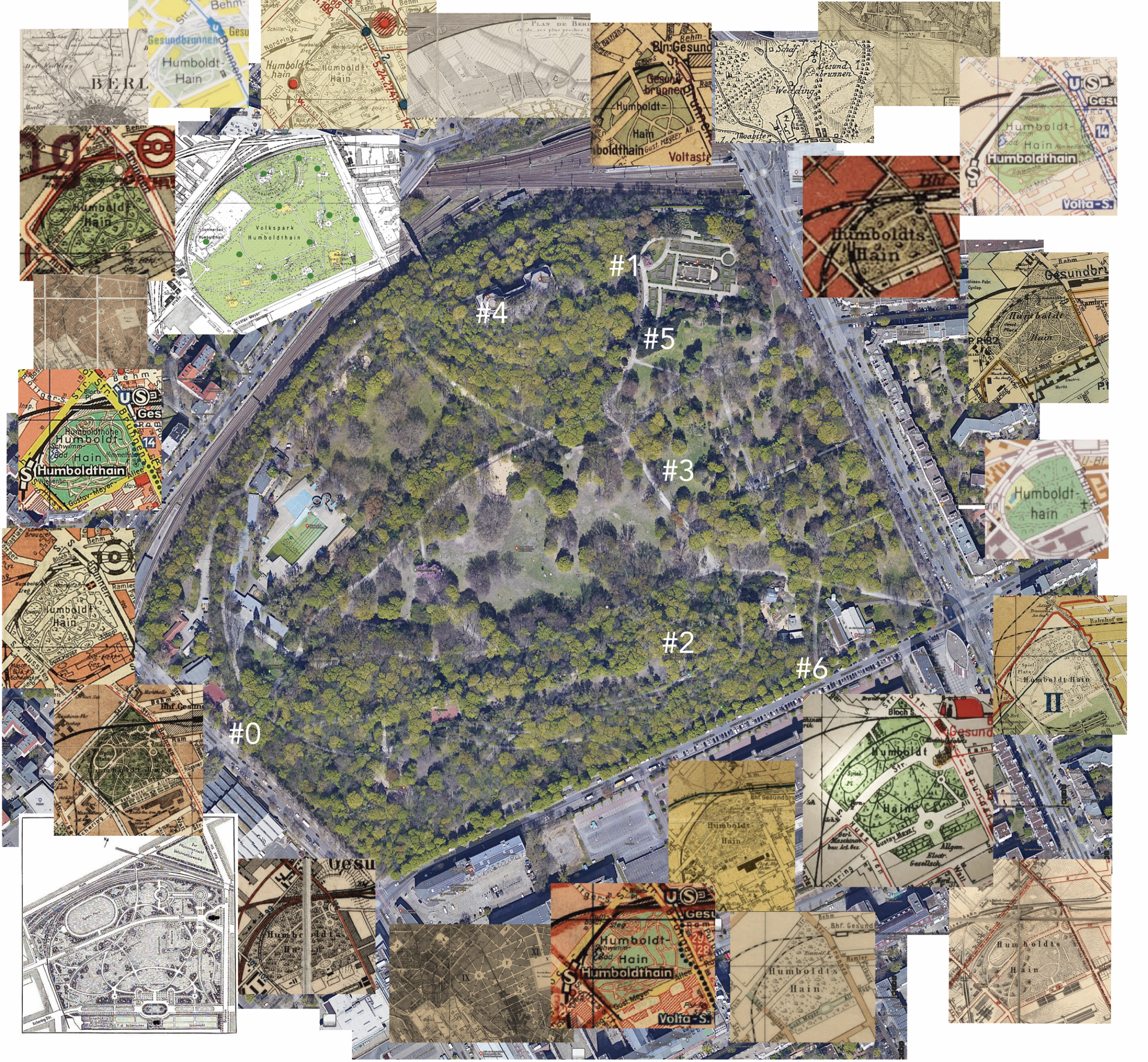
Desviarios Map, designed by Marco Montiel Soto (2021)
DeTour #1 “Encounters in Symmetry” by Pilar Millán (Spain)

In this “Desviario” I would like to share the consequences of a trip: the desire to strengthen a sense of community. In 2019 I travelled to Ecuador and Colombia, where besides Alexander von Humboldt, the Spanish botanist José Celestino Mutis is also well known. Researching my two famous fellow citizens (Cádiz/Berlin), I realized that Humboldt had once taken a 2000 Km detour of his expedition only to meet Mutis in Bogotá, to work with his famous library and extraordinary collection of botanical drawings.
I realized that this encounter was symmetrical, in terms of exchange of knowledge. But, in my view, Cartesian thinking after the scientific expeditions lacked something essential for a full understanding of life in America, like an incomplete translation. As R.Barthes warns us, the encratic language is one or repetition.


From these thoughts a new project was born: The symmetry of Encounters*, where I try to penetrate this scientific language, to make a change. My Detour proposes to form a new symmetry through a common encounter, as an act of symbolic resistance versus the globally spreading radicalism of individualism. A large-scale floor installation made of tiles*, with patterns taken from the botanical plates of Mutis opens the possibility to collectively form a new floor at the highest tower of the old bunker. It is in the encounter between people that “the complete drawing” works, and where the civilizations “heal”. I am interested in the newly emerged symmetries that we can create together, and in the way we can reappropriate this monumental concrete ruin which had been remodeled by the hands of thousands into a hill to form this beautiful park today.
*Pilar Millán. La Simetría de los Encuentros. Pabellón Villanueva, RJBotánico – CSIC, Madrid. Sept-Oct.2021)

Pilar Millán (La Coruña, 1962) resides in Berlin, graduated in Arts, Seville University 2003. Her multi-disciplinary projects tend towards the social and cultural borders and their consequences.
http://pilarmillan.com
DeTour #2 “Ocaso (Sundown)” by Ela Spalding (Panama)
Ocaso (Sundown)
Iteration no. 2 Berlin – Humboldthain Park:
To soothe the mind, relax the cells, pause for a moment… observe the space-time we live in.
Recreating the bedtime routine of a child, with lullabies for humanity and stories about the past, present and future of nature in the place where the work is installed, Ocaso (Sundown) is a space for reflection and rest for living beings of all ages.

To enter this installation:
- Lie down or sit in one of the hammocks or on the grass nearby. Make yourself comfortable.
- You will find three stories in the QR code below (English, Español, Deutsch). Read them aloud to the person(s) you are with. If you are alone, read them to yourself.
- Feel free to close your eyes and doze off for a bit.

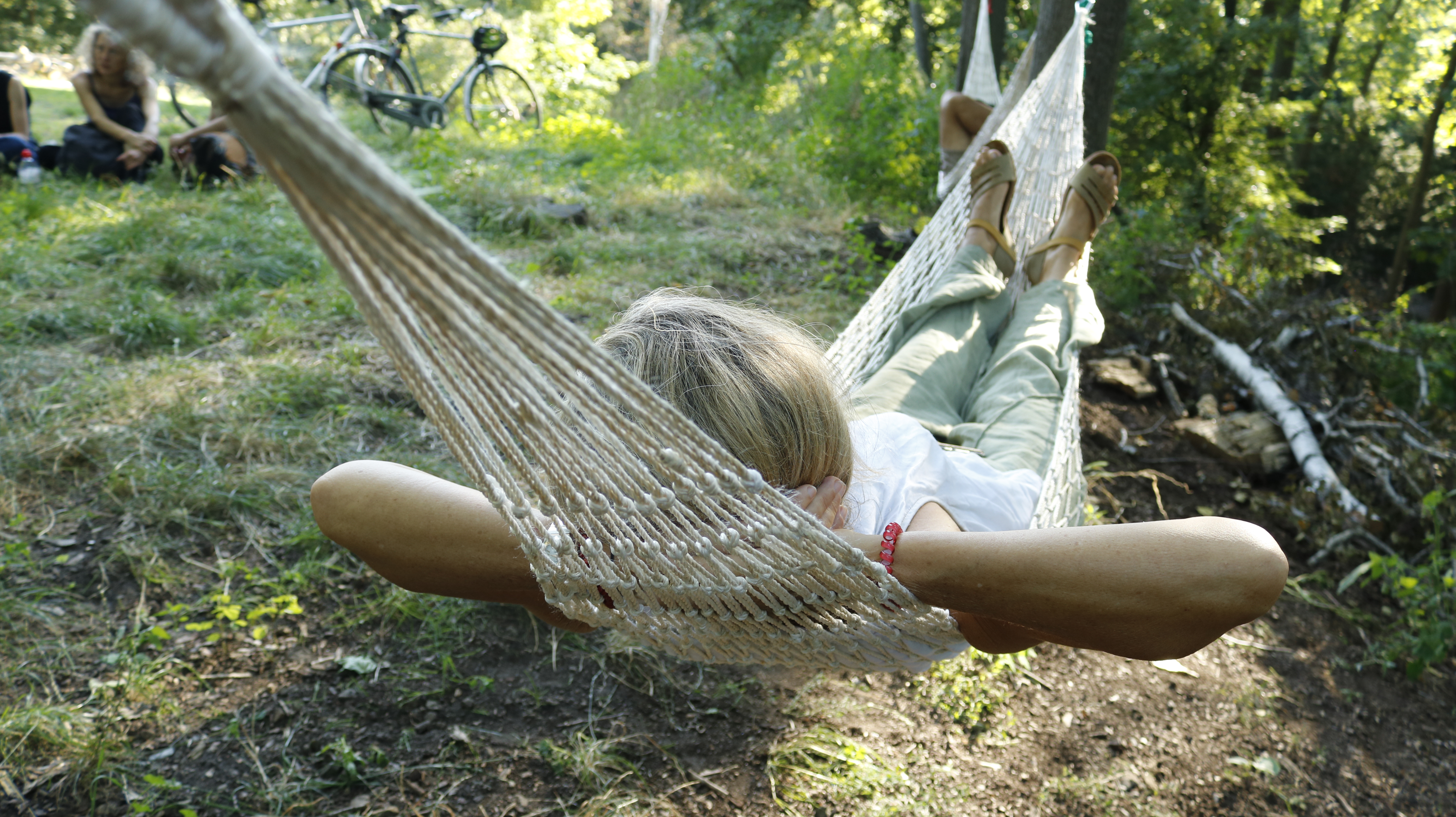
Two of the stories for this iteration of Ocaso (Sundown), were authored by two generous contributors:
Ian Werner (graphic designer and writer, based in Berlin; founder of Slab Mag, which gathers his and others writings on the urban imaginary. Recently he instigated the Meltwater Walks, a walking practice and body of research centred around traces of the last ice-age to be found in Berlin). And Florian Ruland (ecologist who wrote his doctoral thesis about behavioural changes in novel species communities. Teaching at FU Berlin, he explores artistic rituals of grief for biodiversity loss in order to overcome shock and inertia. He is the co-founder of a startup working on an app to support gender equality in the distribution of care work).

Ela Spalding (Panama, 1982) is an artist~facilitator living and working in Berlin. Her work explores the spaces of visual art, sound, somatic practices and wellbeing as conduits to practice and convey expanded notions of ecology. She is an advocate for multidisciplinary collaboration and interconnectedness.
https://elaspalding.com/
DeTour #3 “Río Sónico” (The Sonic River) by Manuela García Aldana (Colombia)
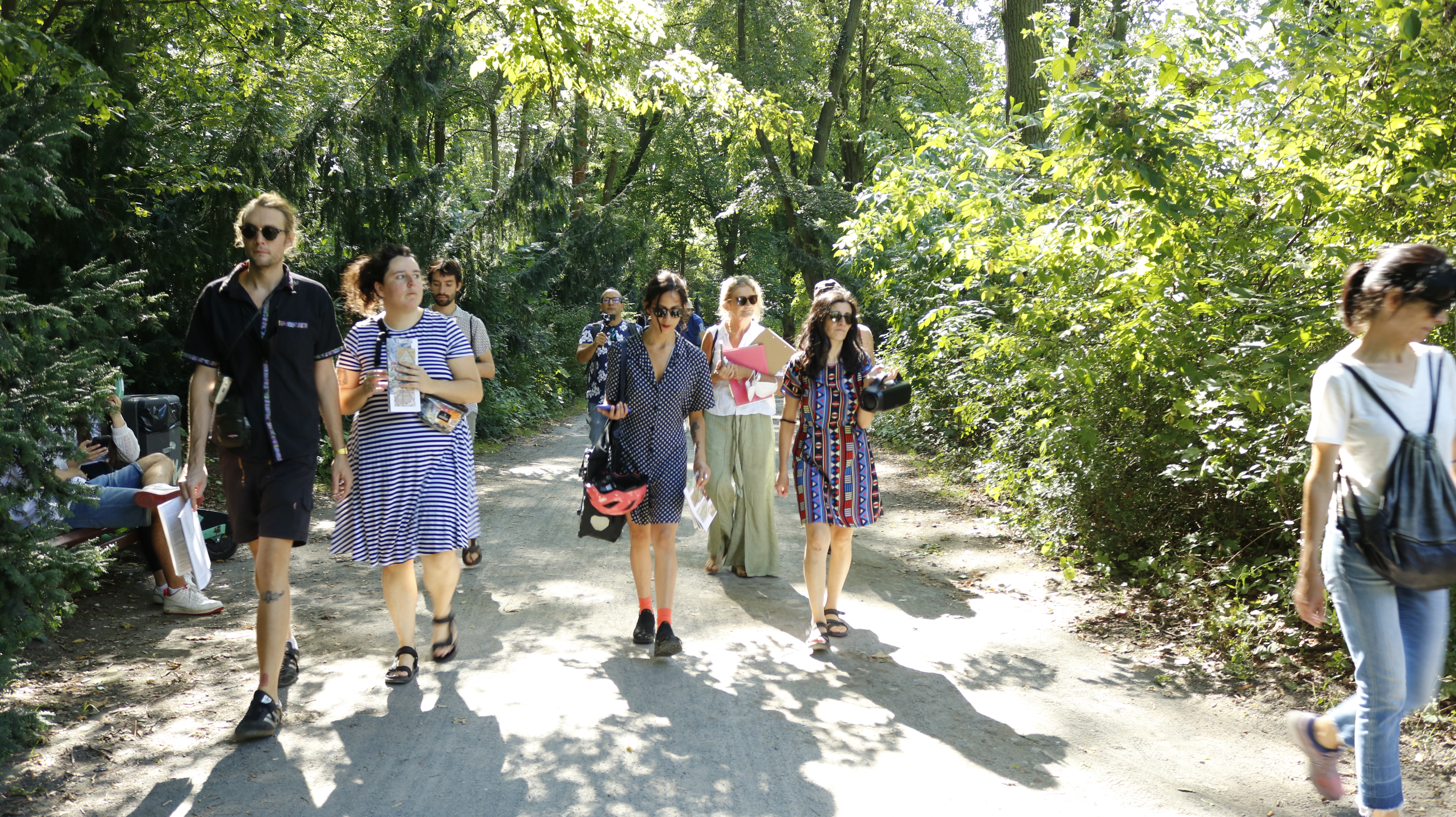
Every place on the planet has its own History, but because of the colonial enterprise in some parts of the planet we, ourselves, have been obliged to see and to listen from the perspective of the colonizer. It is a daily practice and effort to decolonize our perspective towards ourselves and towards the places we come from.
The Sonic River is an invitation to listen to the Magdalena river (Colombia) from a diasporic perspective that seeks for a decentralized and positional way of listening. The Magdalena river flows into the Caribbean Sea and is born in the department of Huila. Manuela comes back to this river in her life as an immigrant in Berlin, tracing the beginnings of Cumbia music with the help of the research of Mirjam Wirz and her book Sobre el Río (Passage).

Notes and sketches of the Magdalena River, made by Alexander von Humboldt on his way to meet Mutis in Santa Fé, 1800. Museums and collections of the Banco de la República de Colombia.
To the rhythm of this musical genre that evolved through migratory movements along this now symbolic river (one of the many rivers in the world that acted as distribution channels), García Aldana’s immersive sonic narrative flows through the slopes of Humboldthain Park juxtaposed with its landscape, and digitally through his radio programme Gardenia Routes (THF), with the broadcast of an episode dedicated to Desviarios and another broadcast on Radio Alhara (Palestine). In her work (con)flow anthropological differences North / South around the aesthetic perception of landscape, which influences the whole sound curatorial experience of the Desviarios programme thanks to a text by Carla Zaganini that the artist shared during the collaborative laboratory sessions:
It is curious that the peoples of the jungles have never sought to construct scenic outlooks (nor, therefore, museums). Or perhaps it isn’t. From above, the forest looks like nothing more than a sea of green. The sea being understood here as it is seen from a ship, of course: a continuous, nearly solid mass, unlike how it is close up. The jungle is the opposite of the panoramic view, of the gaze in perspective. In the jungle everything is seen from up close and everything is interweaved. There is no vantage point for looking at the angle as it would be without us. There is no conceivable panorama, there is no Belvedere. It is no possible to minutiae the jungle and present it. Nor is it possible to trace out the path to follow. The path is made by opening the undergrowth with a machete, just as far as the body can reach, with the strength of both arms, from one step to another.
(Fragment from “Correspondences”, by Carla Zaganini 04 Feb.2020)
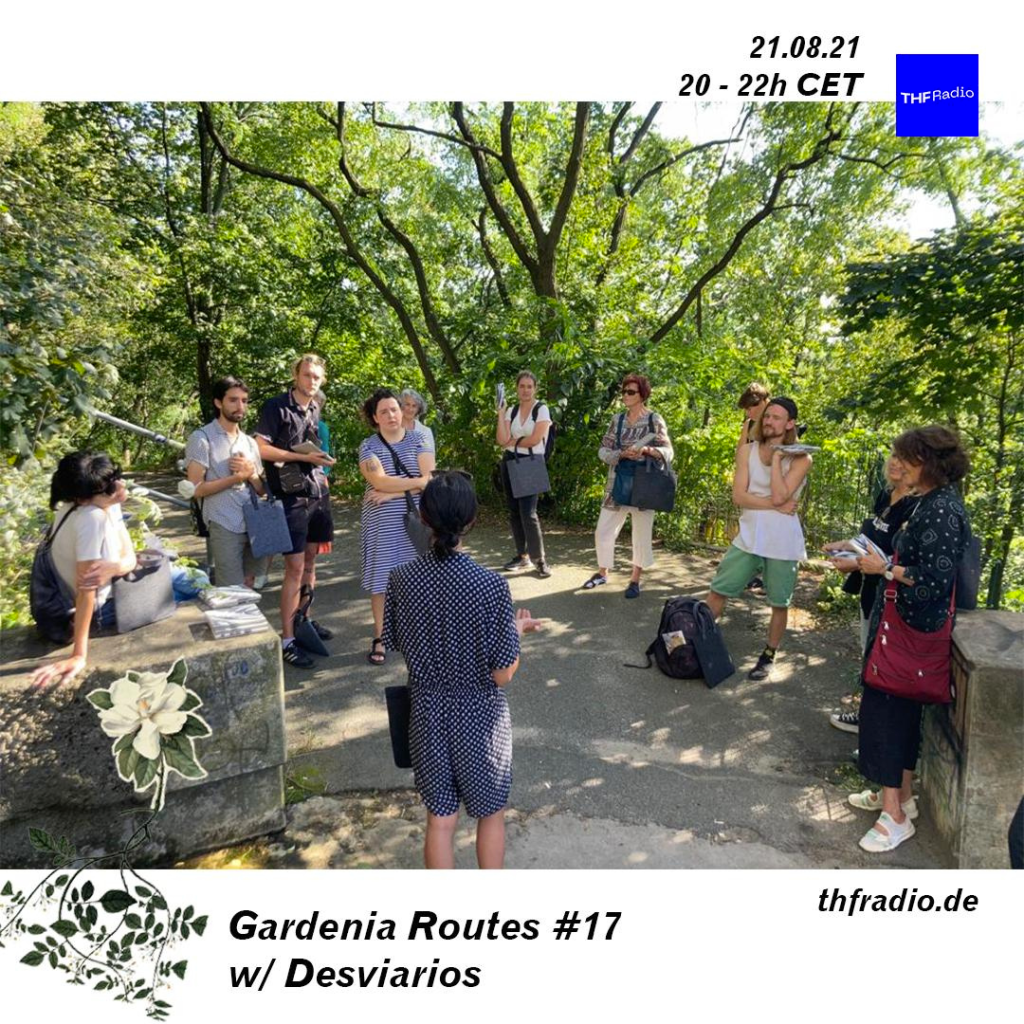
Amuleto Manuela (Manuela García Aldana; Bogotá, 1990) is a Colombian interdisciplinary artist. She graduated in the Universidad de los Andes (Master of Arts) and holds an MA in spatial strategies (Raumstrategien, Berlin Kunsthochschule Weissensee). In her process-based practice (soundscapes, Dj sets, listening collective practices, radio shows and drawings), listening is the principle and arises as a context-driven response in search for spaces of encounter, addressing diaspora and identity questions with the will to unlearn and remember other ways of inhabiting our collective life experience. She hosts sonic shows in independent radio stations THF Radio (Berlin) and Radio Alhara (Palestine). Latest works and compositions have been featured at Agora Collective (insurgencias.net), nGbK (museo de la democracia), Errant Sound (The Listening Academy) and Savvy Contemporary.
https://amuletomanuela.com
DeTour #4 “Science For A Better Life. Crónica de viaje desde Wedding hacia el monocultivo argentino” [ES] / Reisechronik von Wedding in die argentinische Monokultur” [DE] by Julia Mensch (Argentina)
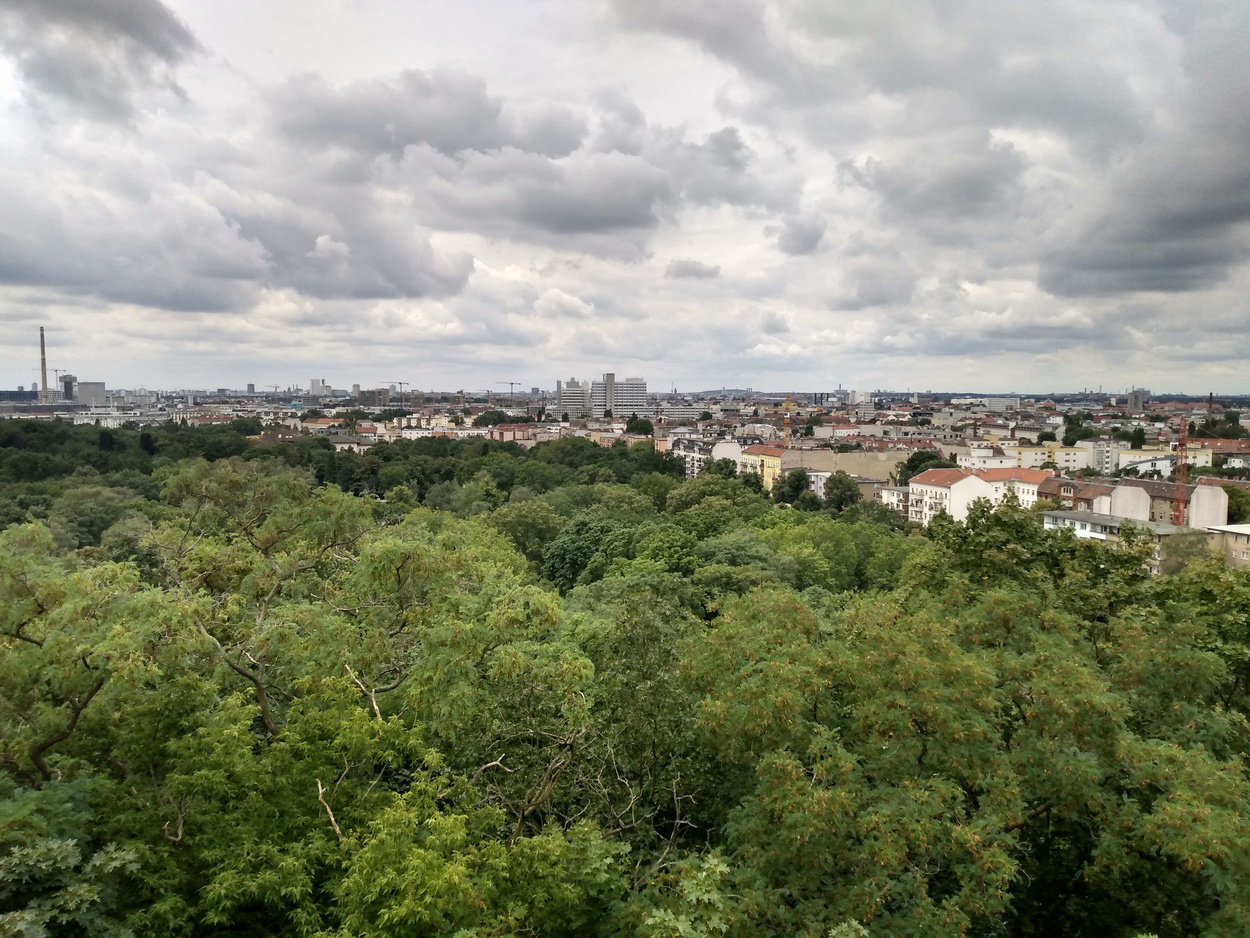
This walk in Humboldthain begins by looking at landscapes near and far, both urban and rural, traversed by the neo-extractivist model of transgenic agriculture. First we will project our gaze towards Wedding, then to the Argentinean soy landscape, and finally at resistances and alternatives that collectively construct other ways to relate with Nature. Divided into two chapters, this travelogue begins in 1996, when the first genetically modified crop was approved for commercialisation: Monsanto’s (today Bayer-Monsanto) 40-3-3 Roundup Ready Soy. But just as the negative effects on the environment and the health of human and non-human beings are increasing, so are the alternatives. They demonstrate that there are real and concrete tools to get out of the current disaster, regenerate the soil and biodiversity, produce healthy, safe and sovereign food, and finally move towards the construction of Buen Vivir (Good Living: a new-old paradigm, based on the indigenous concept of Sumac Kawsay, which means in Quechua, “harmonious life”).
Meanwhile, neo-extractivism advances and neo-colonialism, in the guise of scientific progress, continues to operate, in Wedding Bayer-Monsanto announces with impunity: “Science for a better life”. The question is, what kind of science, for whom, and for what?


Julia Mensch AR/CH (Buenos Aires, 1980). Lives in Buenos Aires and Berlin. Studied at the UNA in Buenos Aires and in Hito Steyerl’s class at the UdK in Berlin. Her work investigates the history of socialism and communism, as well as socio-political and environmental conflicts.
www.julia-mensch.blogspot.com Link publication: Cartografía de un experimento a cielo abierto
DeTour #5 “Historia natural Humboldthain” by Marco Montiel Soto (Venezuela/Colombia)

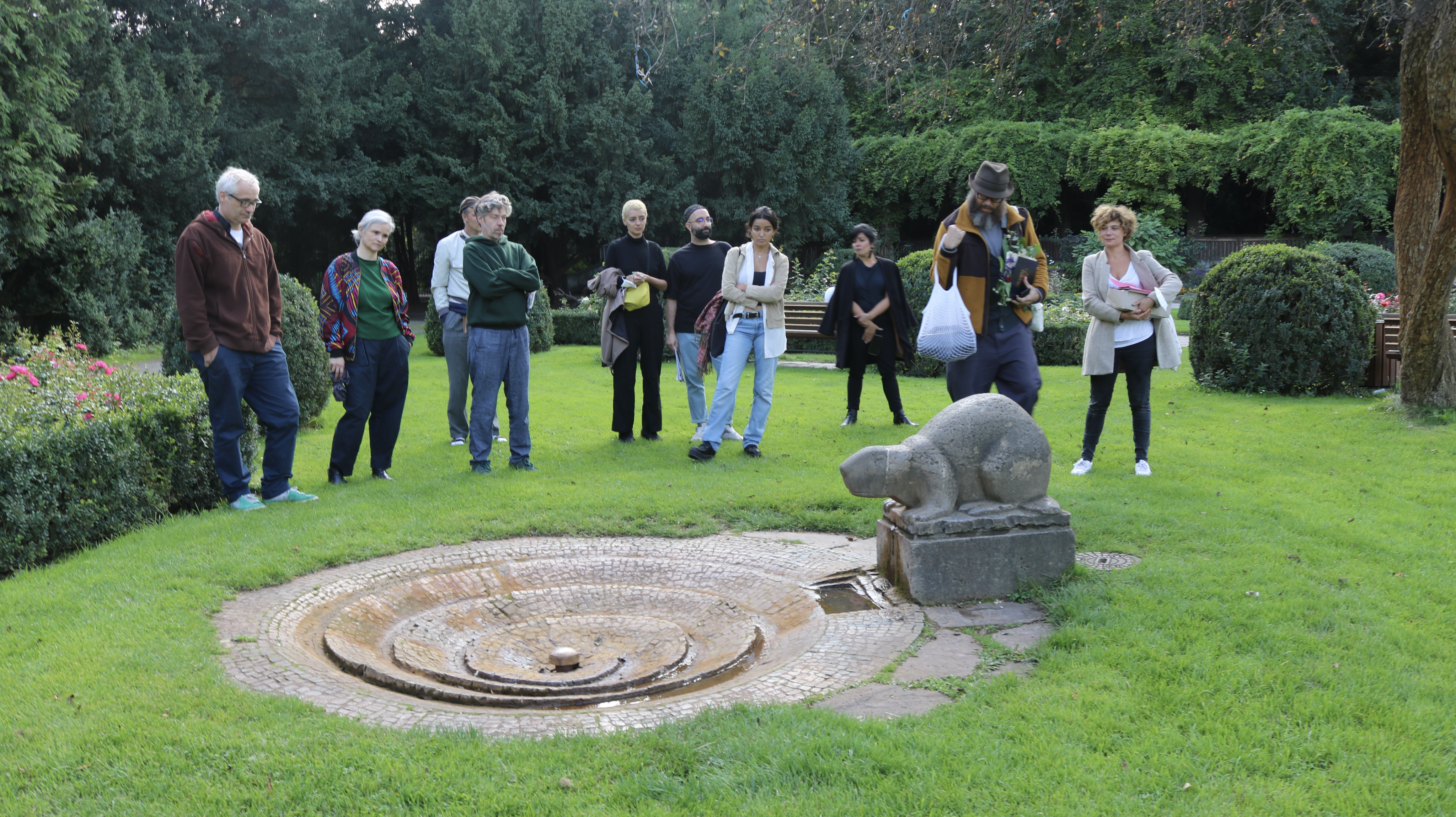
The Volkspark Humboldthain was designed as a landscape with a strong emphasis on Nature, but the park has undergone a total transformation since its construction began on September 14, 1869. The exact day of Alexander von Humboldt’s 100th birthday. At the beginning the park was a botanical garden with a greenhouse, geological walls and an open air vivarium for reptiles and amphibians; later used to build bunkers as mountains radar and underground tunnels; after the park was totally destroyed and it was rebuilt again by its neighbors. The size of the park has been reduced, still a lot of grove or “hain” around, but about Humboldt there is almost nothing left. During this sound walk we will listen a sound composition that will guide us to a route through the jungle, mountains and rivers to contemplate nature, recognize trees and observe history, also a beaver that’s look like a chigüire, bat nests, butterflies, birds, crows, snails, bees, squirrels, stones, bamboo, seeds, leaves, roots and ant kingdoms. A Botanical Expedition to listen the park and listen in the park.

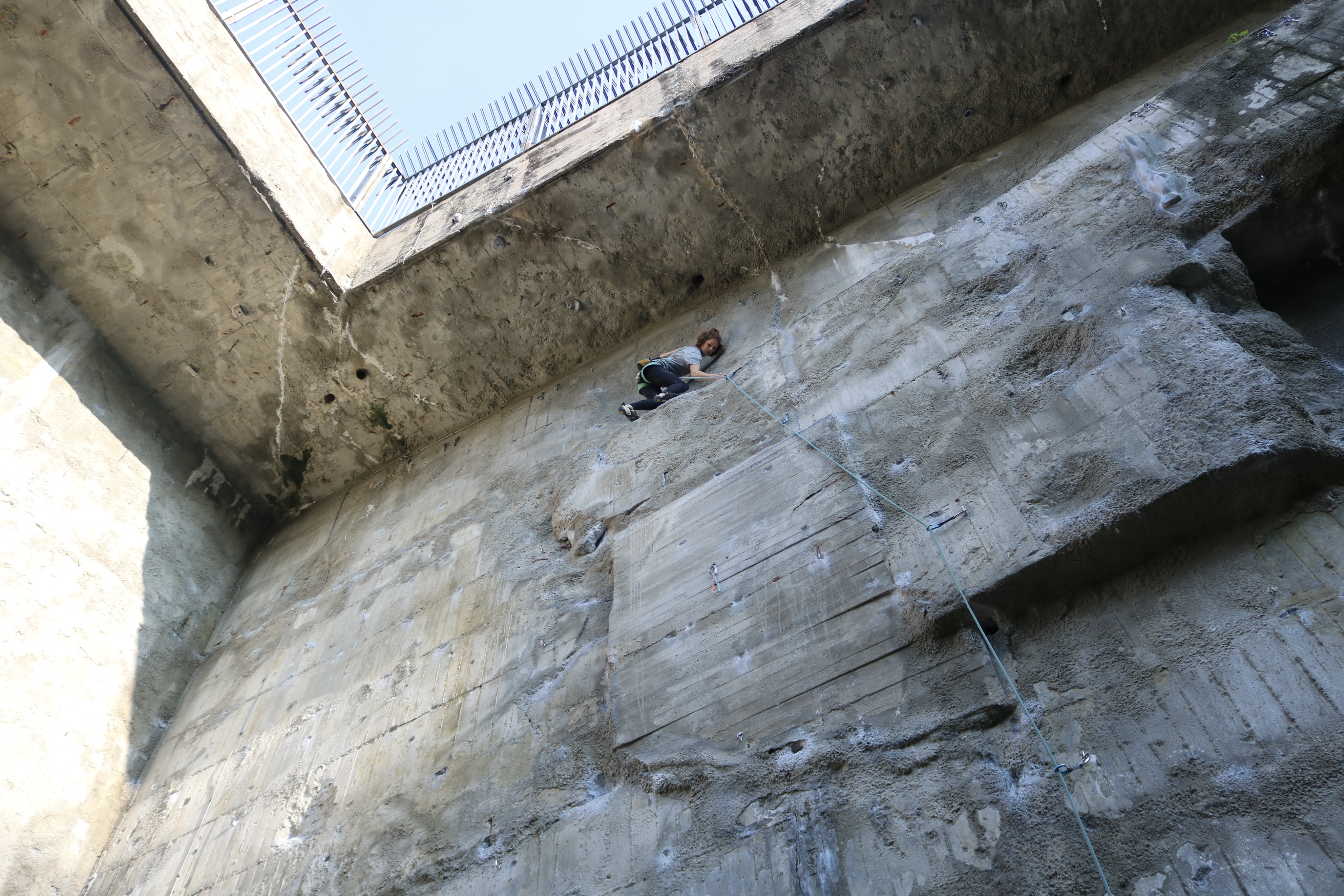
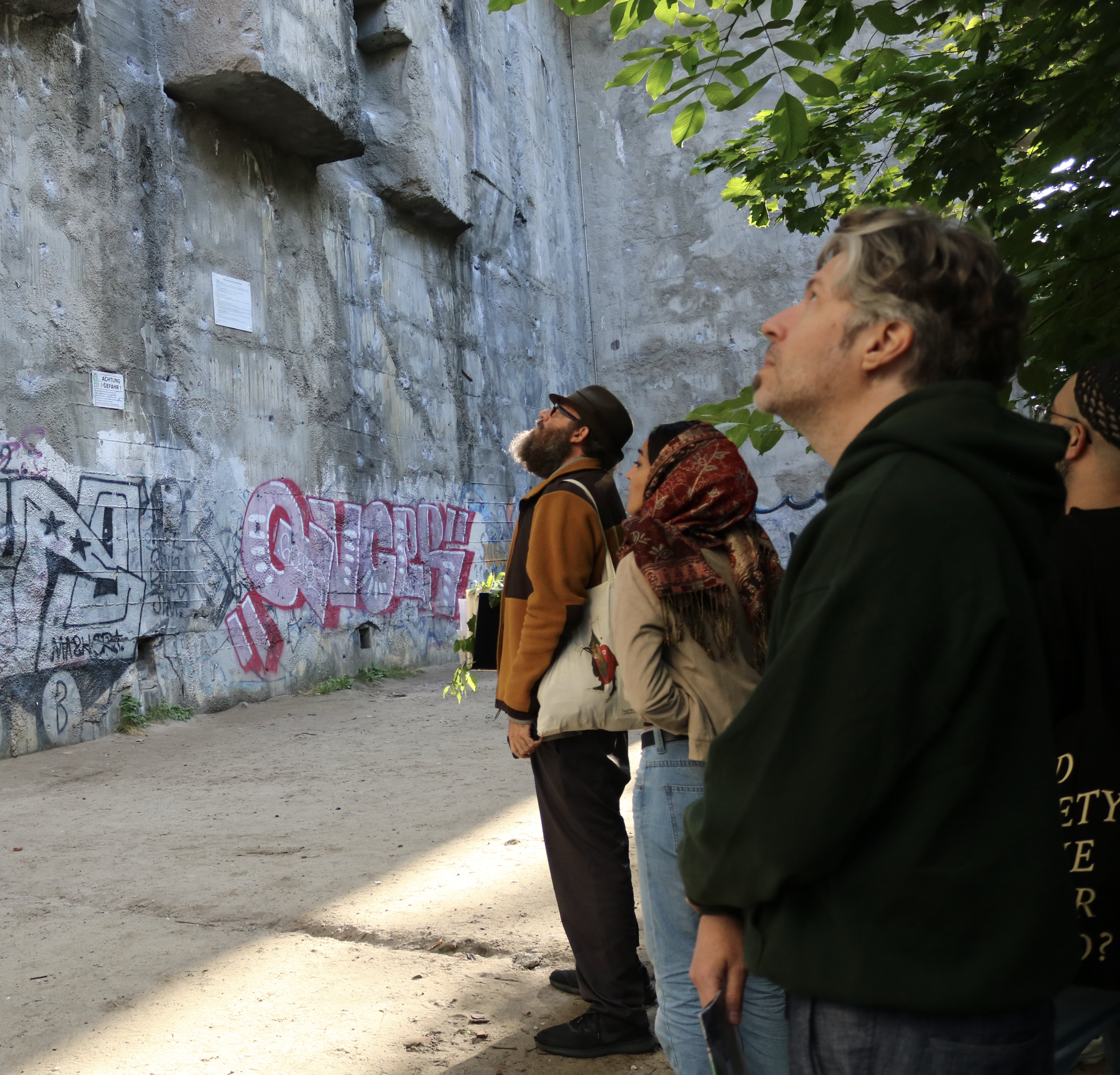
Marco Montiel-Soto (Maracaibo, 1976). Lives and work in Berlin. He studied the Master Sound Studies, Akustische Kommunikation. Universität der Künste, Berlin. Traveller and immigrant, his work explores the intersections between political and poetic territories, traditions, archaeology, myths, death, cosmos and chaos.
https://marcomontielsoto.com
Link sound walk: https://marcomontielsoto.com/historia-natural-humboldthain/
DeTour #6 “Der Humboldt-Pinguin” by Marcela Moraga (Chile)
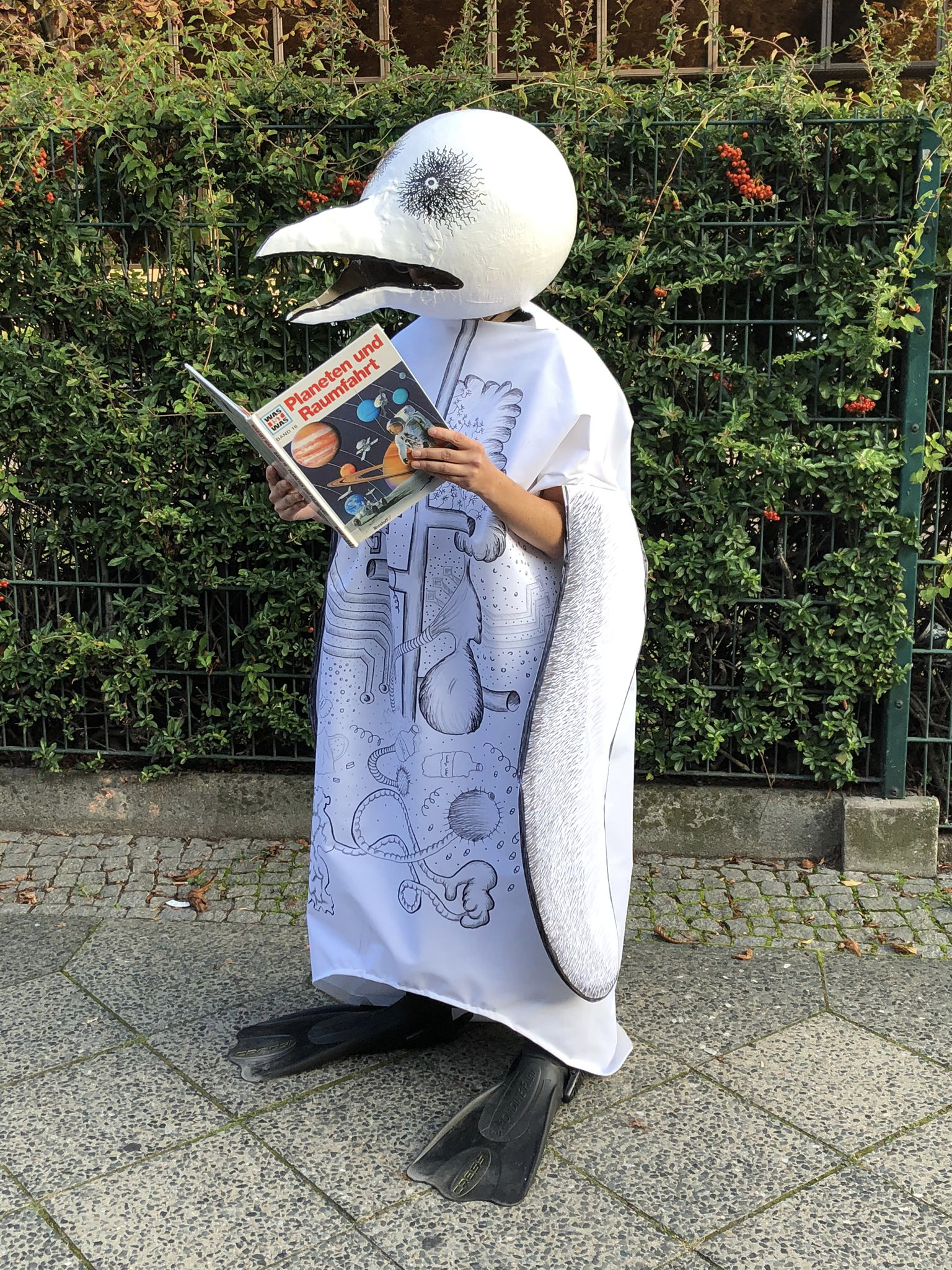
Most humans believe that penguins live only in Antarctica. But the Humboldt penguin originally inhabits the Pacific coasts of Peru and Chile, where the cold waters begin to warm. Many penguins of this species also live in many zoos around the world. This versatility in adapting to different landscapes allows this bird to have a diverse knowledge of climate change and human behaviour. On a walk along the border of the Humboldthain Park, where there is a transparent, shiny wall separating the city from the park, the penguin will tell us about its knowledge of botany, the planets, America, Antarctica and zoos; and how they all arrive at the same place. The border offers different visual perspectives of the park: the surrounding fence, the clutter of branches, the buildings on the other side of the street, the birds coming in and out. This is a unique opportunity to have a conversation between species in an exchange that humans often avoid. During this walk the Humboldt penguin will introduce the book “Neither spices nor species. Chronicle of Patagonia” which will be presented later at Ana Conda am Ufer (Uferstr.23, c/o Uferstudios. 13357 Berlin)

Extracts from the script of Marcela Moraga’s performance:
[Introduction]
Humboldt skunk, Humboldt squid, Humboldt bat, Humboldt sea snail, Humboldt butterfly, Humboldt mountain, Humboldt beetle, Humboldt dolphin, Humboldt spider, Humboldt mushroom, Humboldt orchid, Humboldt cactus, Humboldt cactus, Humboldt glacier, Humboldt ammanita, Humboldt Orchid, Humboldt Cactus, Humboldt Glacier, Humboldt Amanita, Humboldt Iris, Humboldt Stream, Humboldt Meadow, Humboldt Parasite, Humboldt Penguin, Humboldt Penguin, Humboldt Forum.
Hello, I am Spheniscus humboldti or Humboldt penguin.
I am a romantic. I belong to Alexander von Humboldt, ever since he decided to cross the Atlantic. Welcome to the edge of the park or the border, this road is a magic portal, here the 19th century left us bipolar monuments: vegetation and city, recreation and work, animals and men, darkness and hygiene, botanical landscape and urban landscape, the history of trees and plants and the history of people.



Book presentation and closing of the programme at ACaU (c/o Uferstudios – Berlin) Martin la Roche (left), Marcela Moraga (right). 04.09.21
Marcela Moraga (San Fernando, Chile, 1975). Lives and works in Berlin. She studied visual arts at the University of Chile, the HFBK in Hamburg and the UDK in Berlin. In her video-performances, textiles, drawings and installations, Marcela Moraga explores the tensions of the nature/culture binary order.
http://www.marcelamoraga.org/
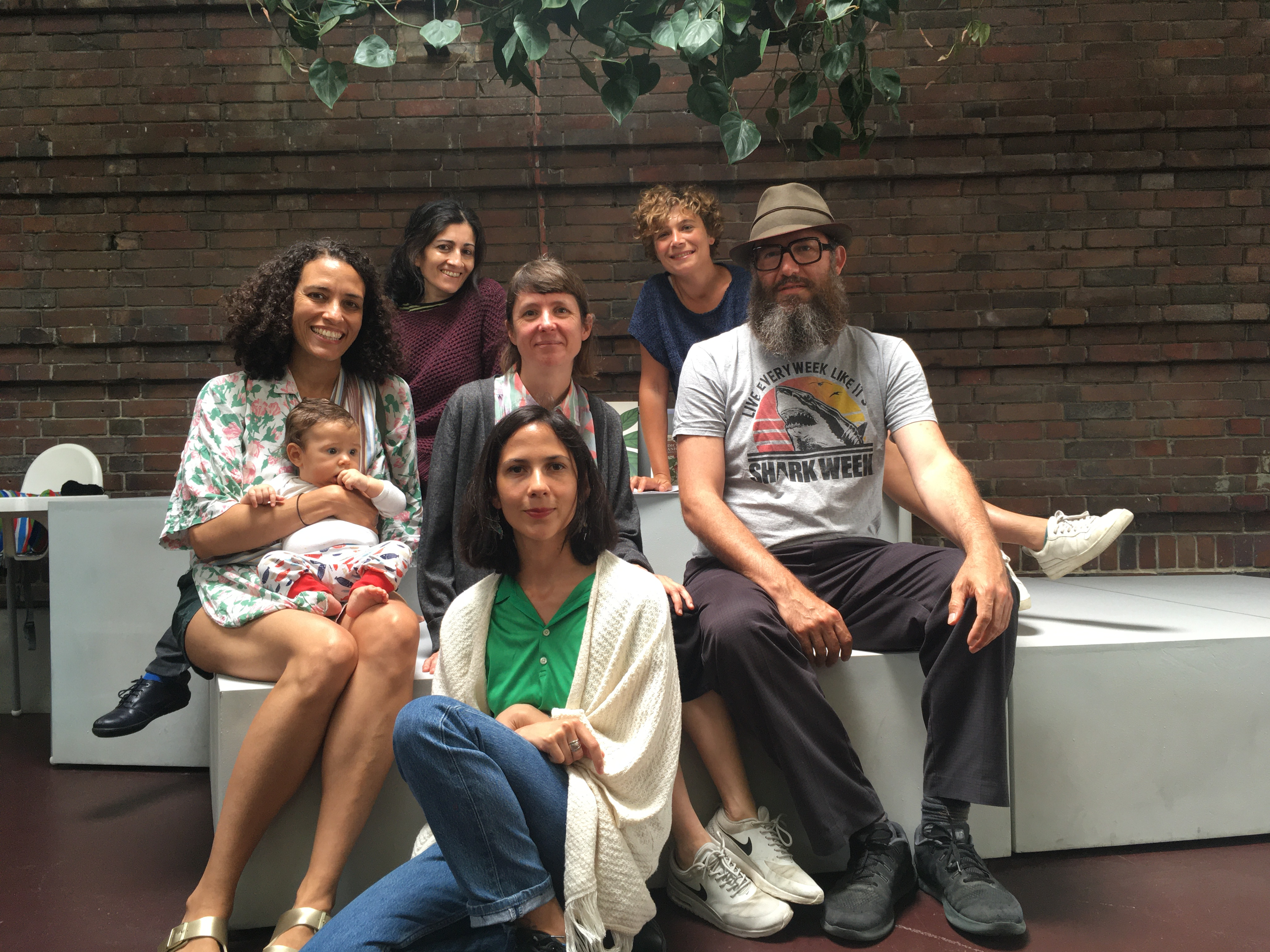
Collaborative landscape laboratory at Ana Conda am Ufer (ACaU)July – August 2021
Bibliography & References of the project

Berríos, María (2010): “Desvíos de la deriva. Experiencias, travesías y morfologías” (Museo Nacional Centro de Arte Reina Sofía, 5.5.-23.08.2010)
https://www.museoreinasofia.es/multimedia/desvios-deriva-conversacion-entre-lissette-lagnado-maria-berrios
Burckhardt, Lucius (2006): Why Is Landscape Beautiful? The Science of Strollogoly. Ed. Markus Ritter and Martin Schmitz, Basel: Birkhäuser, 2015
Careri, Francesco (2002): Walkscapes. Walking as an aesthetic practice. Ed.Gustavo Gili, Land&Scape series.
Celestino Mutis, José: José Celestino Mutis, una expedición botánica. Ed. La Fabrica. 2019
Cardiff, Janet (2015): The walk book. Thyssen-Bornemisza Art Contemporary, A21
Ndikung, Bonaventure (2018): “Those Who Are Dead Are Not Ever Gone (On the Maintenance of Supremacy, the Ethnological Museum and the Intricacies of the Humboldt Forum)”. In South as a State of Mind. Summer/fall 2018, X issue
Vidal Claramonte, Mª Carmen África, Traducción y asimetría. Peter Lang. Internationaler Verlag des Wissenschaften, Frankfurt am Main 2010.
Rojas Mix, Miguel (1992): América imaginaria. Co-ed. Erdosain Ediciones
Vázquez, Rolando (2020): VISTAS OF MODERNITY decolonial aesthesis and the end of the contemporary. Publication by the Mondriaan Fund.
Walser, Robert (1917): Der Spaziergang-The walk. New Direction Books.


 PAZ PONCE _ PORTFOLIO
1 comment