Statement (May 2018)
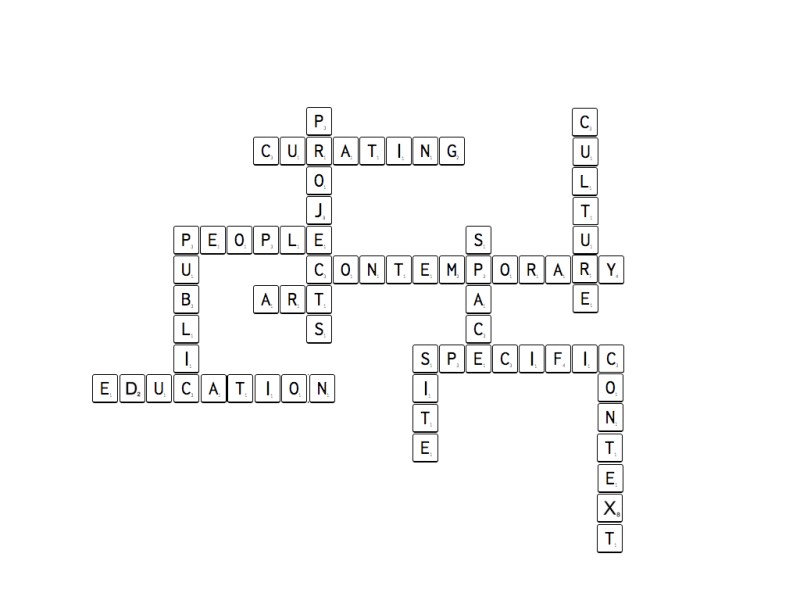
Collaborating means being a stranger in somebody else’s presence / practice / territory / language. And we are all familiar with being strangers in new situations, so begin with a question, the same one you ask yourself when you arrive at a new place. This is important for the communication of the project towards all phases of production, to find a symmetry between what is in your mind and the future participating audience. Develop an empathic ear: *What do we have in common? This question becomes a mirroring research tool. Now the subjects addressed by these question are several: your collaborating partner(s), the targeted community involved in the project (making and later reception), the site where the project would be realized. Collaboration is a way of receiving others, which involves the recognition of where they come from and the projection of a new line that marks the horizon, towards which the practice as a whole will be directed. First translation act is a question of identification and it positions all participants at the same level: the “wondering self”, the state of inquire and the position of the skeptic (the “negotiating self”). To collaborate means to deterritorialize your identity, staying open to the “space of the propositional”. Be in the “seeking” (skepsis in greek: to search). That’s the benefit and quantifiable outcome of the participatory process. The unmeasurable benefit has always an aesthetic nature (art as experience), therefore, subjective. The capacity of “worlding” together (H.Arendt) under the ephemeral architecture of encounter you are proposing in the temporary community formed around a shared language. There is a poetic transference in the possibility to transform the ways in which we relate with the every-day (Art as a technology of imagination).
[EN] BIO / 300 words
Paz Ponce (ES, 1985) is a Berlin-based art historian and curator. Her practice explores curation as a form of care and situated memory, focusing on community-building, participation, and cross-cultural exchange (EU & Latin America). She has extensive experience designing public programmes that integrate artistic research, civic engagement, and interdisciplinary methods, from sound walks to decolonial narratives.
As an organiser/producer, she founded several advocacy/project platforms focused on diversity: insurgencias.net (artists at risk from Latin America), neue häute e.V. (community practices & social choreographies), Organismendemokratie e.V. (rights for all living beings).
She is Curator of Public Programmes & Outreach at TA T – Tieranatomisches Theater – an exhibition space, stage, and laboratory for curatorial practices within Humboldt University’s Center for Culture Techniques. In this role, she brings an eco-feminist approach to curating, drawing from performing arts, museum studies & critical pedagogy, visual culture and philosophy of science. Her practice expands traditional frameworks, fostering knowledge exchange across art, science and social practices. Through this lens, she engages in redistributing power, reassembling narratives, queering the archive, fostering networked communities, and curating the present as it unfolds.
She works & produces in transnational contexts, including: nGbK, ZK/U – Zentrum für Kunst und Urbanistik, Silent Green, ARCH+, Uferstudios, Tanzfabrik, NODE Center for Curatorial Studies, Künstlerhaus Bethanien, Agora Collective, berlinerpool, NON Berlin – Asia Contemporary Art Platform, Galerie Wedding, 48 Stunden Neukölln, Ballhaus Ost (Berlin); Impulse Theater Festival (NRW), Brecht Festival (Augsburg); Laboratorio Artístico de San Agustín (LASA) & Centro de Arte Contemporáneo Wifredo Lam, Bienal de La Habana (Havana, CU); Casa Tomada, Goethe Institut São Paulo (São Paulo, BR), Universidad Federal de Bahia (Intervalo Fórum de Arte – Federal University of Bahia (Salvador, BR); IFAIC/Ministerio de Cultura y Patrimonio (Quito, EC); Politforum Bern (Bern, CH); CSA La Tabacalera (Madrid, ES), Onassis AiR (Athens, GR); Cinema Lumbardhi (Prizren, KV); Esplanade – Theatres on the Bay (Singapore, SG); Academy of the Arts (Szczecin, PL); Lokomotiva (Skopje, MK); and B_Tours Festival (Berlin/Tel Aviv, IL).
Curatorial projects: www.pazponce.com
Dramaturgy: www.clubreal.de | www.organismsdemocracy.org
Art production: www.neuehaeute.org | www.insurgencias.net
Research platforms: http://dialogue4culture.hotglue.me
www.museodelademocracia.net | https://thedreamersplatform.wordpress.com
[DE]
| CV Paz Ponce 2025 Deutsch
[Skills-profile]
Her skill set bridges artistic, organisational, and research dimensions of cultural work. She combines strong management expertise—fundraising, budgeting, programming, coordination, communication strategies, and legal frameworks—with the ability to design and deliver ambitious projects across visual arts and performing arts.
Specialised in outreach strategies, public engagement, and context research, she develops formats that connect artistic practices with civic and community spheres. Her curatorial and advisory work is rooted in Berlin’s histories of activism, urban change, and cultural diversity, which she translates into relevant frameworks for artists, institutions, and networks.
She has extensive experience as a site-specific curator and dramaturg, advising cinema productions, dance projects, and urban interventions, as well as producing interdisciplinary collaborations from research stage to post-production and international circulation. Skilled in grant-writing and EU cultural programmes, she supports artists and organisations in securing resources and building long-term partnerships, having advised Erasmus+ Program “Curating in Context” (2019–2021) and contributed as curator to EU Culture Europe Programme: CAPP – Collaborative Arts Network (2015–2018).
As a lecturer , she has designed and taught courses on curatorial research methods, artistic communication, and fundraising, sharing tools for professional practice with emerging curators and artists for nine years at the Node Center for Curatorial Studies, Berlin (2016–2024). As an editor and researcher, she has published on contextual artistic practices in Cuba and on self-organisation in international platforms, demonstrating her capacity to mediate knowledge across geographies and disciplines.
Beyond project-making, she contributes to the development of self-organised infrastructures and collective platforms, strengthening the sustainability of cultural ecosystems. Her practice thrives in transnational and cross-sector contexts, where she brings precision, clarity, and imaginative strategy to complex productions.
Contact info:
pazppb@gmail.com
Instagram: @pazponce_post_studio_practice
Linked-In: https://www.linkedin.com/in/paz-ponce-pérez-bustamante-795a777a/
–
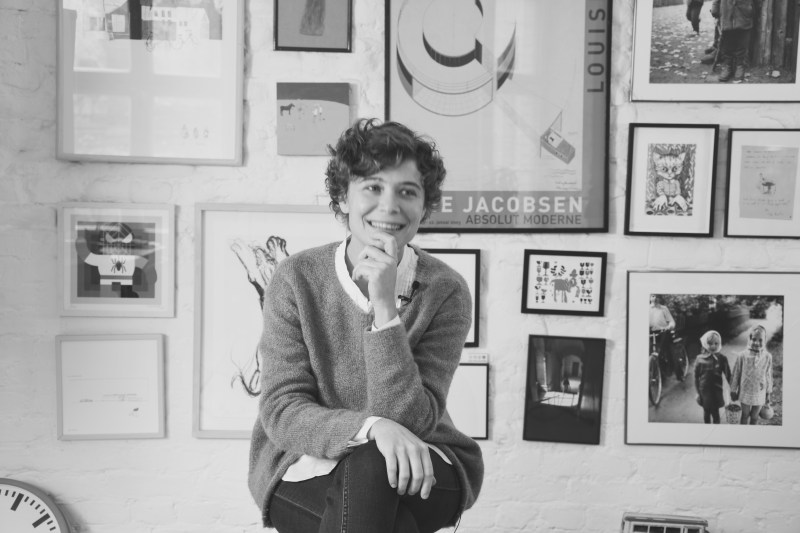
at LOWER EAST LAB, Berlin-Kreuzberb
November 14th 2017
Photo credits: Elizabeth Parsons
Press
♦ [DE] / [EN] Anna Lena Wenzel: “Gespräch mit Paz Ponce Pérez-Bustamante”, nGbK – Gesprächs, 14.01.2022
https://www.ngbk.de/de/8-generelle-seiten-de / https://www.ngbk.de/en/9-generelle-seiten-en
♦ [EN] Myrto Katsimicha: “Curating in context – A conversation with Paz Ponce”. Onassis Air / Pali-Room Series: Governance, 18.10.2021
https://www.onassis.org/initiatives/onassis-podcasts/pali-room/curating-in-context-a-conversation-with-paz-ponce
♦ [ES] Alejandra Villasmil: “museo de la democracia”, ARTISHOCK – Entrevistas, 29.07.2021
https://artishockrevista.com/2021/07/29/museo-de-la-democracia/
 PAZ PONCE _ PORTFOLIO